

- Want to Make Money Online? Try This Proven Method - August 20, 2026
- The Best Way to Turn Your Dreams Into Reality - July 18, 2026
- The One Thing Poor People Must Understand to Change Their Lives - July 15, 2026
There was a time when I felt like I was constantly busy but not actually getting much done.
Every day seemed to be filled with endless tasks,researching topics, writing blog posts, answering messages, organizing ideas, and trying to keep up with everything else on my to-do list. By the end of the day, I would often wonder where all my time had gone.
One of my biggest challenges was how long it took me to complete simple tasks. I could spend hours researching a topic, looking for the right words to start an article, or trying to organize information in a way that made sense.
Sometimes I would get stuck staring at a blank screen, unsure of where to begin.
It was frustrating because I knew what I wanted to achieve, but the process often felt slow and overwhelming.
That changed when I started experimenting with AI tools. At first, I wasn’t expecting much. I thought AI was just another technology trend that people were talking about.
However, the more I used it, the more I realized how helpful it could be.
AI helped me brainstorm ideas when I was stuck, speed up my research process, organize my thoughts, and even handle repetitive tasks that used to consume a lot of my time.
What surprised me most wasn’t that AI could do certain tasks quickly,it was how much time and mental energy it freed up for me.
Instead of spending hours on routine work, I could focus on creating better content, learning new skills, and working on projects that actually required my attention and creativity.
I wasn’t working less; I was simply working smarter.
Of course, AI isn’t a magic solution that does everything for you. It still requires human judgment, creativity, and effort.
When used correctly, it can be an incredibly powerful tool for improving productivity and making everyday tasks easier. In this article, I’ll share my experience with AI, how it has improved my productivity, and some practical ways you can use it to save time and get more done.
In today’s fast-paced digital world, productivity is more important than ever.
Understanding how AI can improve productivity is essential for anyone who wants to stay competitive in modern workplaces.
AI technologies can automate repetitive tasks, analyze large amounts of data, improve decision-making, and free up time for more important work.
One of the most powerful tools helping people achieve this goal is Artificial Intelligence (AI).
From small business owners to large corporations, AI is transforming the way people work.
In this article, we’ll explore how AI can improve productivity, the benefits it offers, and practical ways individuals and businesses can start using AI today.

1. Automating Repetitive Tasks
There are so many tasks in daily life and work that feel like a broken record,copying the same text, replying to similar messages, sorting files, posting content, or updating spreadsheets.
At first, they don’t seem like a big deal, but over time they quietly eat up your energy and hours.
Automating repetitive tasks with AI changes that completely.
The extra time and efficiency I gained from AI allowed me to focus on several daily habits that significantly improved my online income. I shared those habits where I Started Simple Daily Habits and My Online Income Improved.
Instead of doing the same thing over and over, you can set up tools that handle them for you in the background, freeing your mind for more important and creative work.
It’s like switching from carrying water one bucket at a time to turning on a tap that keeps it flowing.
For a student, it could mean auto-organizing study notes; for a business owner, it could be auto-replies to customers or scheduled posts.
The best part is that automation doesn’t just save time,it reduces stress, so your energy is spent on thinking, creating, and growing instead of repeating.
One of the biggest ways AI can improve productivity is through automation. Many daily tasks are repetitive and time-consuming, such as:
Data entry
Email responses
Scheduling meetings
Sorting files
Customer support responses
AI-powered tools can handle these tasks automatically, saving hours of manual work. For example, AI chatbots can answer common customer questions 24/7, while AI scheduling assistants can arrange meetings without human involvement.
By automating routine tasks, employees can focus on more valuable activities like strategy, creativity, and problem-solving.
According to IBM, artificial intelligence is transforming the way businesses automate tasks and improve efficiency.
One of my favorite uses of AI is creating graphics faster and more efficiently. I cover some of the best options in “AI Tools for Graphic Design.
2. Faster Data Analysis and Insights
In a world where information is everywhere, the real challenge is not finding data but understanding it quickly enough to make smart decisions.
This is where faster data analysis powered by AI becomes a game changer. Instead of spending hours or even days trying to sort through numbers, reports, or trends, AI can process huge amounts of data in seconds and highlight what truly matters.
It can spot patterns you might miss, show rising trends, and even predict possible outcomes, helping you act with confidence instead of guessing.
For a student, it could mean quickly understanding research results; for a business owner, it could mean knowing what customers want before competitors do.
It feels like having a sharp assistant who turns confusion into clarity almost instantly. The result is not just speed, but better decisions made at the right time.

Modern businesses generate massive amounts of data every day. Analyzing this information manually can take weeks or even months. AI systems can process huge datasets within seconds and provide valuable insights.This means businesses can:
Identify trends quickly
Make faster decisions
Predict future outcomesImprove planning strategies
For instance, AI can analyze customer behavior to help companies understand what products people want the most. This helps businesses make smarter decisions and increase overall efficiency.
As helpful as AI can be, responsible use requires awareness of its limitations and dangers. That’s discussed in “Dark Side of AI: Risks Nobody Talks About.
3. Improved Time Management
Time often feels like it slips away before we even realize it,one minute you’re planning your day, and the next you’re already behind schedule, rushing to catch up.
Improved time management is about taking back control from that feeling. It means learning how to prioritize what truly matters, break tasks into smaller steps, and use your hours in a way that actually moves you forward instead of just keeping you busy.
With better time management, even overwhelming days start to feel more organized because you know exactly what to focus on and when.
For example, instead of jumping between distractions, you can set clear time blocks for study, work, rest, and personal activities.
Over time, this habit doesn’t just make you more productive,it reduces stress and gives you a sense of calm, because you’re no longer chasing time, you’re guiding it.

Time management is a key factor in productivity. AI tools can help individuals organize their schedules more effectively by prioritizing tasks and managing workloads.
Some AI productivity tools can:
Suggest the best time for meetings
Automatically prioritize important tasks
Track deadlines and reminders
Optimize work schedules
These systems help people avoid wasting time and stay focused on high-priority work.
Among the many ways ai boosts my productivity, social media content creation stands out as one of the most useful. that’s why i put together “powerful ai tools for social media content,” where i share tools that can help creators produce better content in less time.
4. Enhancing Workplace Communication
In many workplaces, problems don’t come from lack of effort, but from poor communication,messages get misunderstood, instructions are unclear, and important details are missed.
Enhancing workplace communication changes that by making information clearer, faster, and easier to share.
With better communication tools and practices, teams can stay aligned, understand their roles better, and work together without unnecessary confusion.
It becomes easier to ask questions, give feedback, and share updates in real time, which reduces mistakes and saves time.
For example, instead of waiting days for email responses, teams can collaborate instantly and solve issues on the spot.
Good communication also builds trust among workers, making the workplace feel more connected and less stressful.
In the end, when people understand each other better, they don’t just work harder,they work smarter and achieve more together.

Another way AI can improve productivity is by improving communication among teams. AI tools can assist with writing emails, summarizing meetings, and translating languages instantly.
For example, AI tools can:Generate quick email draftsTranscribe meetings automatically
Provide instant language translation
Summarize long documents
This makes collaboration easier, especially for remote teams working across different locations.
5. Supporting Creativity and Content Creation
Many people assume AI only works with numbers and automation, but it can also boost creativity. Content creators, marketers, and bloggers are using AI tools to generate ideas, write drafts, and design graphics.
AI can help with:
Blog writing
Social media content
Video scripts
Image creation
Marketing campaigns
Instead of replacing human creativity, AI acts as a powerful assistant that speeds up the creative process.
Many organizations are adopting AI tools to simplify work processes and improve decision making, as explained by Microsoft AI resources.
6. Reducing Human Errors

Human mistakes can slow down productivity and cause serious problems, especially in fields like finance, healthcare, and engineering. AI systems are designed to minimize errors by analyzing data carefully and following programmed instructions.
For example, AI can detect:
Financial fraud
Data inconsistencies
Security threats
Manufacturing defects
By identifying problems early, organizations can avoid costly mistakes and improve overall efficiency.
7. Improving Customer Service
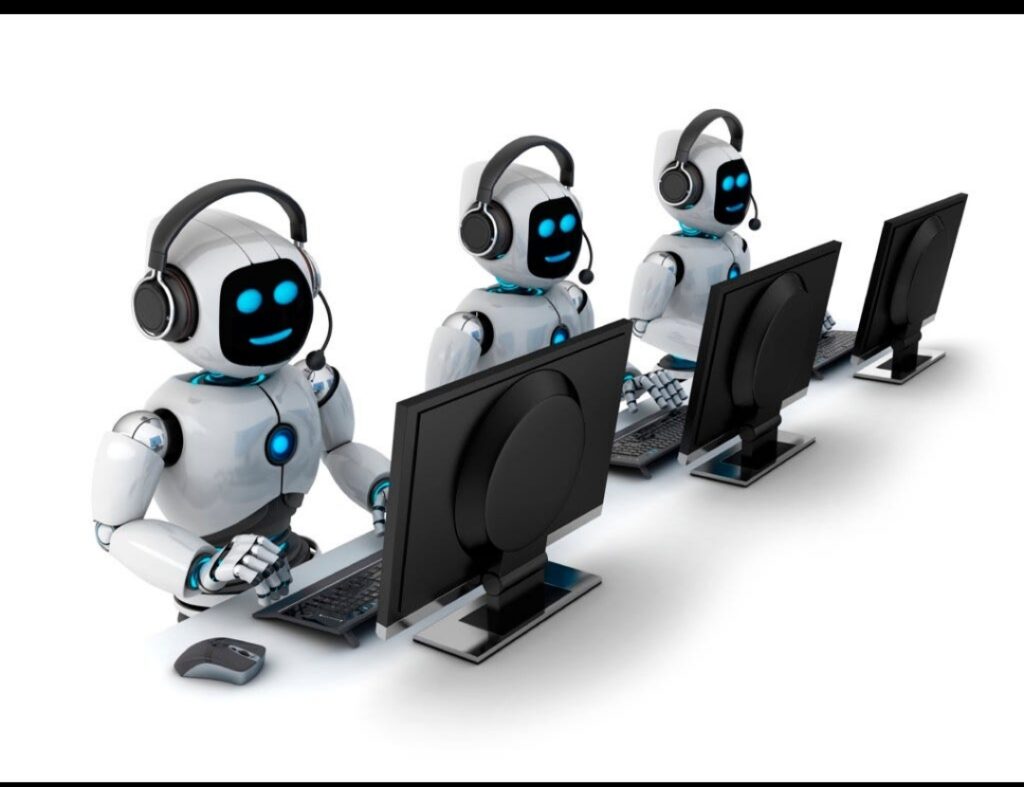
Customer service plays a major role in business productivity. AI-powered chatbots and virtual assistants allow businesses to respond to customer questions instantly without requiring human staff to be available at all times.
Benefits of AI in customer service include:
24/7 customer support
Faster response times
Reduced workload for employees
Improved customer satisfaction
With AI handling basic inquiries, human staff can focus on more complex customer issues.
8. Personal Productivity for Individuals
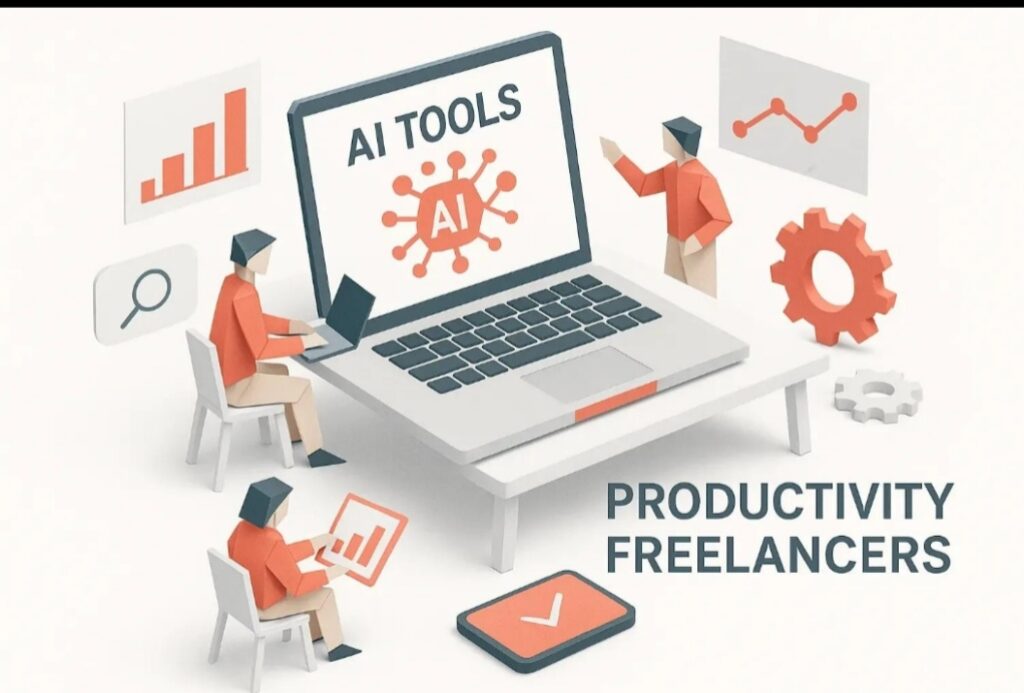
AI is not only useful for large companies. Individuals can also use AI tools to improve their daily productivity.
Some common AI tools help people:
Write faster
Organize notes
Manage tasks
Edit photos and videos
Learn new skills
Students, freelancers, and entrepreneurs can all benefit from using AI to work more efficiently.
Research from McKinsey shows that companies using AI can significantly increase productivity and operational efficiency.
9. Better Content Creation in Less Time
Content creation can be one of the most rewarding yet time-consuming tasks, especially when you are trying to consistently produce high-quality work. Whether it’s writing blog posts, creating social media content, developing marketing materials, or brainstorming new ideas, the process often requires extensive research and careful planning.
AI has changed this by making it easier to generate ideas, organize thoughts, and create detailed outlines within minutes.
Instead of spending hours trying to determine what to write about or how to structure a piece of content, creators can use AI as a starting point and then add their own expertise, personality, and creativity.
This not only speeds up the writing process but also allows more time to focus on improving content quality and engaging with audiences.
As a result, content creators can maintain a consistent publishing schedule without feeling overwhelmed by the constant demand for new material.
10. Faster Learning and Skill Development
In today’s rapidly changing world, the ability to learn quickly is more valuable than ever.
New technologies, trends, and skills emerge regularly, making continuous learning essential for personal and professional growth. However, finding reliable information and understanding complex topics can often take a significant amount of time.
AI simplifies this process by providing quick explanations, summarizing lengthy materials, and breaking down difficult concepts into easy-to-understand language.
Instead of spending hours searching through multiple websites, books, or videos, learners can receive focused information that helps them grasp key concepts more efficiently.
This accelerated learning process allows individuals to acquire new skills faster, stay informed about industry developments, and adapt more easily to changing circumstances.
The time saved can then be invested in practicing and applying newly acquired knowledge rather than simply searching for it.
11. Improved Organization and Planning
Productivity often suffers when tasks, deadlines, and responsibilities become difficult to manage. Without a clear system for organization, it is easy to forget important commitments or become overwhelmed by competing priorities.
AI-powered tools can play a significant role in solving this problem by helping individuals organize schedules, manage projects, set reminders, and prioritize tasks based on importance.
These tools can analyze workloads, suggest efficient workflows, and even identify potential scheduling conflicts before they become problems.
Having a structured plan not only improves efficiency but also reduces stress because there is less uncertainty about what needs to be done next.
When daily activities are organized effectively, it becomes easier to stay focused, maintain momentum, and achieve long-term goals without constantly feeling rushed or disorganized.

12. Smarter Decision-Making
Making informed decisions often requires gathering information, comparing alternatives, and evaluating potential outcomes.
This process can be time-consuming, particularly when dealing with large amounts of data or multiple options.
AI can assist by quickly analyzing information, identifying patterns, and presenting relevant insights that might otherwise be overlooked.
For businesses, this could involve analyzing customer behavior or market trends, while individuals might use AI to compare products, evaluate opportunities, or research important topics.
Although AI should not replace human judgment, it can serve as a valuable tool for supporting better decisions.
By reducing the time required to collect and process information, AI allows people to focus on evaluating the results and choosing the option that best aligns with their goals and priorities.
13. Reduced Mental Fatigue
Many daily activities involve repetitive and routine tasks that consume valuable mental energy without providing much value in return.
Answering similar emails, organizing files, generating reports, conducting basic research, and performing administrative work can become mentally exhausting over time.
It helps reduce this burden by automating many of these repetitive activities, allowing individuals to reserve their mental energy for more important and meaningful work.
This reduction in mental fatigue can have a significant impact on overall productivity because people are able to maintain higher levels of focus and creativity throughout the day.
Instead of feeling drained by routine responsibilities, they can devote their attention to solving complex problems, developing innovative ideas, and making strategic decisions that contribute more directly to their success.
14. Greater Consistency and Productivity
One of the biggest challenges in achieving long-term success is maintaining consistency.
While motivation can provide temporary bursts of energy, it is consistent effort that produces meaningful results over time.
AI contributes to consistency by providing ongoing support for planning, research, content creation, communication, and task management.
When processes become more efficient and less time-consuming, it becomes easier to maintain productive habits on a daily basis.
This consistency is particularly valuable for entrepreneurs, content creators, students, and professionals who need to manage multiple responsibilities simultaneously.
Rather than struggling to keep up with an increasing workload, individuals can rely on AI-powered tools to streamline their workflow and maintain steady progress toward their goals. Over time, these small improvements in daily productivity can lead to significant long-term achievements.

15. More Time for Meaningful Activities
Perhaps the most significant benefit of AI is the opportunity to reclaim time that would otherwise be spent on repetitive and time-intensive tasks.
Time is one of the most valuable resources available, yet many people spend a large portion of it on activities that do not directly contribute to their most important goals.
By automating routine work and improving efficiency, AI creates more opportunities to focus on activities that truly matter.
This could include growing a business, pursuing educational goals, spending quality time with family and friends, developing new skills, or simply enjoying a healthier work-life balance.
Productivity should not be measured solely by the amount of work completed but also by the ability to use time wisely and intentionally.
When technology helps eliminate unnecessary effort, individuals gain greater freedom to invest their energy in the activities that bring the greatest value and fulfillment to their lives.
Pros And Cons Of Ai
AI greatly improves productivity by saving time and reducing effort on repetitive tasks. It can quickly analyze data, generate ideas, and automate workflows, allowing people to focus more on creative and high-value work.
It also helps reduce errors, improve accuracy, and enhance decision-making by providing fast insights.
In many cases, AI acts like a smart assistant that helps students, workers, and business owners complete tasks faster and more efficiently.
Despite its benefits, AI also has some downsides.
Over-reliance on AI can reduce critical thinking and creativity if people depend on it too much.
There are also concerns about job displacement, as some routine tasks may no longer require human effort.
In addition, AI tools can sometimes produce incorrect or biased information, which can lead to poor decisions if not carefully checked.
Privacy and data security issues are also important concerns when using AI systems.
Overall, AI is a powerful tool for productivity, but it works best when balanced with human judgment, creativity, and responsibility.
The Future of AI and Productivity
The future of AI and productivity is shaping up to be a world where work feels less stressful and more meaningful.
Instead of spending most of our time on repetitive or time-consuming tasks, AI will handle much of the heavy lifting,organizing schedules, analyzing information, generating ideas, and even helping make decisions.
This will allow people to focus more on creativity, problem-solving, and personal growth rather than getting stuck in routine work.
Imagine a future where students learn faster with personalized study support, and businesses run smoother with smart systems that anticipate needs before they even arise.
However, this future is not about replacing humans,it’s about working alongside AI as a powerful partner.
As AI continues to improve, productivity will no longer just mean doing more in less time, but doing better work with less stress and more balance.
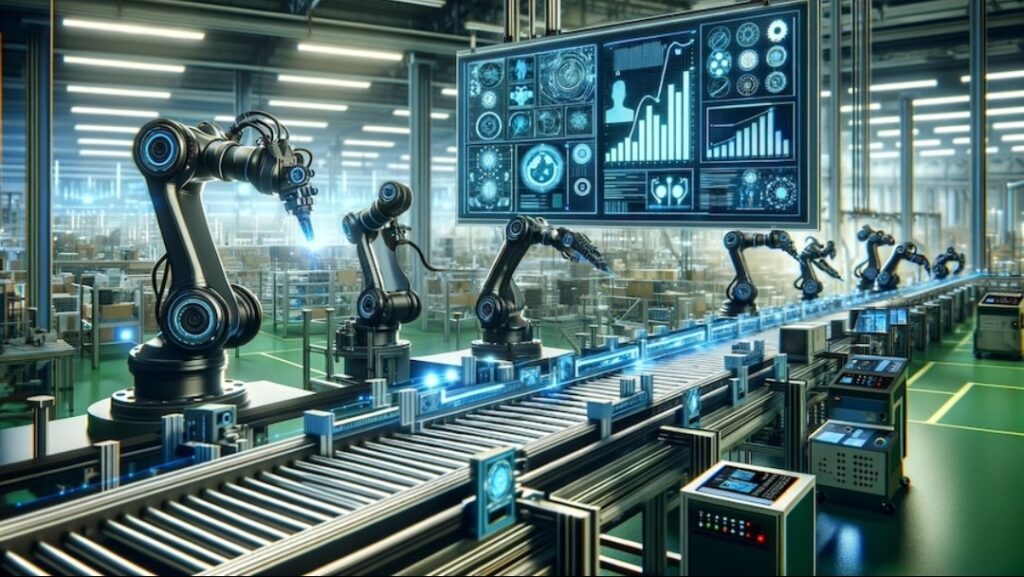
The role of AI in productivity will continue to grow in the coming years.
As AI technology becomes more advanced, we can expect smarter automation, better decision-making tools, and more personalized work assistants.
Businesses that adopt AI early will likely gain a significant competitive advantage. Individuals who learn how to use AI tools effectively will also become more efficient in their work.
Where Do We Go From Here?
Understanding how AI can improve productivity is becoming increasingly important in the modern digital world.
AI helps automate repetitive tasks, analyze data quickly, improve communication, and support creative work.
Whether you are a business owner, a freelancer, or an employee, AI can help you save time and work more efficiently.
By embracing AI technology, individuals and organizations can achieve higher productivity levels and focus on what truly matters — innovation, creativity, and growth.
If you want to protect your business while using new technologies, read our guide on how to prevent online scams to stay safe online.
AI can make your work easier, but showing up every day still matters. That’s something I discuss in “How to Stay Consistent Online Even When You Feel Like Quitting
